For this European trip, I followed a classic itinerary that many travelers choose:
Paris (France) → Interlaken (Switzerland) → Lucerne (Switzerland) → Milan (Italy) → Venice → Florence → Rome.
The journey spanned 16 days and three countries.
Before setting off, I assumed that flights, hotels, and train tickets would require the most preparation. However, the issue that actually gave me the most pause was something seemingly minor:
What is the most convenient way to get online once I arrive in Europe?
I’ve run into plenty of snags on past trips abroad. Once, in Japan, I bought a physical SIM card but spent half an hour struggling to activate it after landing. Another time, I rented a portable Wi-Fi device for Southeast Asia; I had to remember to charge it every day, and I nearly had to pay a penalty for forgetting to return it on the last day.
A key feature of this European loop trip was the frequent border crossings. After spending four days in Paris, I took a train into Switzerland and then continued on to Italy. The mere thought of swapping SIM cards every time I entered a new country was exhausting.
That’s why I seriously looked into regional eSIM plans for Europe for the first time and ultimately chose Airalo’s European regional package. In practice, it turned out to be the most stress-free decision of the entire trip.
What are the downsides of the three traditional ways to get online while traveling in Europe?
Before choosing Airalo, I researched the mainstream options on the market and carefully compared the three common methods: international roaming, physical SIM cards, and portable Wi-Fi devices.
First, there’s carrier-based international roaming. Its biggest advantage is convenience—you can connect to the internet immediately after landing without any extra setup. However, the downsides are equally obvious: costs are generally high, and many plans come with data caps. For an in-depth trip lasting over two weeks—where you need to use navigation, upload photos, and browse social media daily—the total cost can be much higher than expected. Some plans even throttle speeds once you hit the data limit, resulting in a poor user experience.
Next is purchasing a physical SIM card. While this is a great choice for single-country trips, it’s a hassle for someone like me who is crossing borders between France, Switzerland, and Italy. Some SIM cards work in only one country, meaning you might have to buy and activate a new one after crossing a border. Frequently swapping SIM cards not only risks losing the original card but also involves a lot of unnecessary hassle. This is particularly true when traveling by train across Europe—moving from France in the morning to Switzerland in the afternoon, for instance. If your connection suddenly drops, it can disrupt everything from navigation and hotel bookings to digital train tickets.
Then there is the option of renting a portable Wi-Fi hotspot. I used to rely on these for business trips but eventually stopped. The reason is simple: traveling already requires carrying a camera, a power bank, and travel adapters; adding yet another device just creates extra bulk. Plus, portable hotspots need daily charging and come with the inconvenience of deposits and return logistics. Internet speeds can also suffer if multiple people connect simultaneously.
After weighing the options, I realized these traditional solutions all had limitations, whereas Airalo’s European regional eSIM perfectly solved the cross-border connectivity issue that mattered most to me.
Why did I ultimately choose Airalo?
The deciding factor was simple: Airalo’s European regional plan works across multiple countries.
While browsing the Airalo website, I discovered they offer eSIM products specifically designed for the European region. This is incredibly practical for someone like me planning to visit several countries in one trip. You can purchase and install it beforehand, so it’s ready to use the moment you land in Europe—no need to constantly swap SIM cards or buy new data plans every time you cross a border.
What’s more, Airalo comes highly recommended by European backpackers, digital nomads, and long-term travelers. After reading plenty of genuine reviews, I decided to give it a try myself.
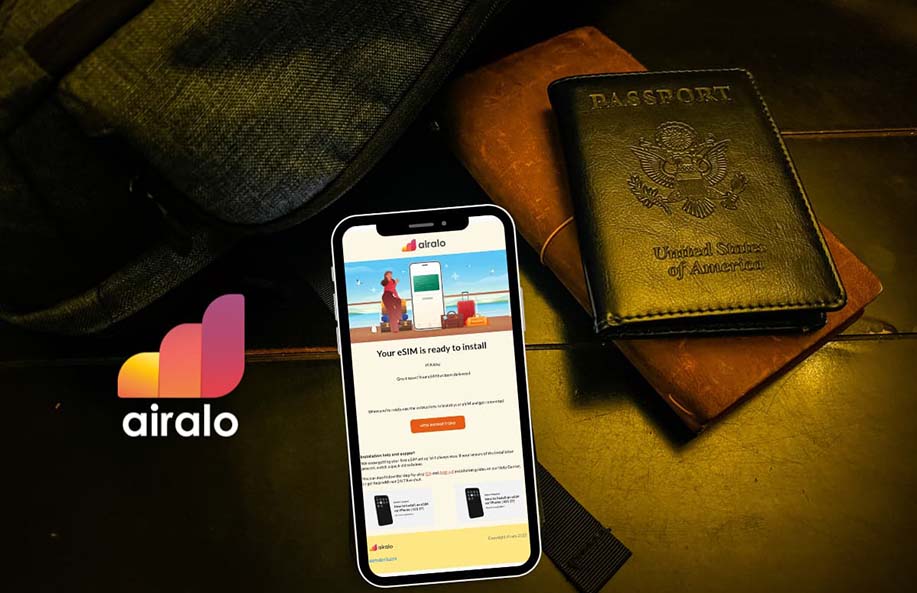
I purchased and installed the eSIM via Airalo the day before my trip. The entire process took less than 10 minutes—far easier than I had imagined. Once installed, I simply had to wait until I landed in Europe to activate it.
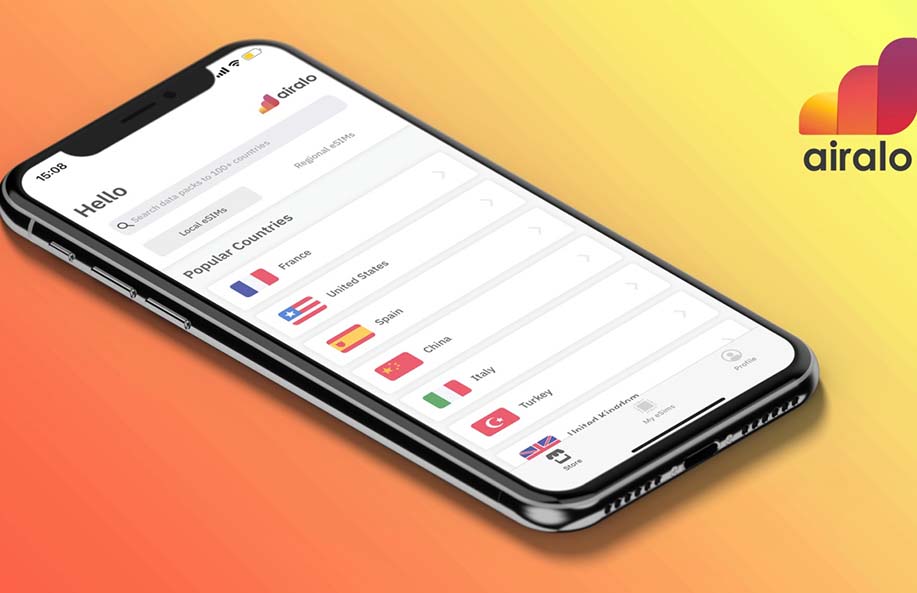
Hands-on test: Airalo’s European regional plan
What truly impressed me was Airalo’s performance when crossing borders.
During my time in Paris, Airalo automatically connected to a local carrier. The signal was stable, Google Maps navigation worked perfectly, and I had no issues uploading photos or looking up travel tips. Later, I took a high-speed train from Paris to Switzerland. I expected to have to reconfigure my network settings, but shortly after the train crossed into Switzerland, Airalo automatically switched networks.
There was no need to swap SIM cards, restart my phone, or perform any extra steps; connectivity was restored almost instantly.
Only someone who has traveled across multiple countries can truly appreciate just how convenient that experience is. In the past, crossing borders always brought worries about losing the connection, navigation failing, or being unable to open digital tickets; however, using Airalo this time made those concerns virtually disappear.
The journey from France to Switzerland, and then to Italy, went incredibly smoothly. For a multi-country European trip, that seamless connectivity provided real peace of mind.
Real-world navigation performance
Maps and navigation are indispensable tools for independent travel in Europe.
Whether I was navigating transfers in Paris’s complex metro system, finding platforms at Swiss train stations, or weaving through the labyrinthine alleys of Venice and Rome’s historic center, I relied on map apps constantly.
Throughout the 16-day trip, Airalo’s navigation performance remained consistently reliable. Maps loaded quickly, location updates were real-time, and route planning was lag-free. Even while traveling by train through the Swiss mountains, the connection remained strong, with no prolonged periods of map-loading failures.
For independent travelers, reliable navigation matters more than raw speed test numbers, and I was thoroughly impressed with Airalo in this regard.
Social media performance
I updated my social media—primarily Instagram, TikTok, and Telegram—almost daily during the trip.
With Airalo, photo uploads were fast, messages synced instantly, and short-video playback was smooth. Especially in urban areas like Paris and Milan, I experienced virtually no buffering while watching short videos.
I frequently uploaded photos and videos taken that day directly to social platforms to share my experiences with friends. Airalo handled everything perfectly, with no issues regarding frequent disconnections or loading failures.
For anyone who loves documenting their life while traveling, this level of network performance is more than sufficient.
Hotspot sharing performance
A common question people ask is: Can Airalo be used as a hotspot?
The answer is yes, and the actual experience was excellent.
On several days during the trip, I carried both a tablet and a laptop to handle some work tasks. I simply enabled the hotspot feature on Airalo to connect my other devices to the internet.
Whether I was sending emails, syncing cloud files, uploading documents, or joining video conferences, the overall performance was stable. While I wouldn’t use it as a permanent replacement for a home broadband connection, it was more than adequate for occasional remote work while traveling. This is particularly practical for digital nomads, freelancers, and users who need to work while traveling.
Which Airalo plans are recommended for different itineraries?
Based on my own experience during this trip to Europe, you can choose different Airalo plans depending on the duration of your itinerary.
For short trips of around seven days—such as an independent trip to Paris, a single-country tour of Italy, or a ski vacation in Switzerland—Airalo’s basic plans generally suffice. Since the trip is short and data consumption is relatively limited, these plans offer great overall value.
For in-depth trips lasting around 15 days, I believe this is the best option. Plans in this category are perfect for classic circuits covering France, Italy, and Switzerland; multi-country tours of Western Europe; or extensive explorations of Eastern Europe. They cover the entire journey without the need to frequently top up data.
For those planning to stay in Europe for more than a month—such as digital nomads, long-term business travelers, exchange students, or long-term independent travelers—the 30-day plan is highly recommended. Opting for a long-term plan upfront is far more convenient and makes budget management easier than repeatedly purchasing individual data packages.
How much money can you actually save with multi-country plans?
This is a question many people care about most.
I did a quick comparison before setting off. Suppose your itinerary covers France, Switzerland, and Italy: if you were to buy local SIM cards for each, you would not only pay three separate fees but also spend time finding where to buy them, activating them, and troubleshooting connectivity issues when crossing borders.
In contrast, Airalo’s European regional plans allow for a single purchase that works across multiple countries. While prices vary by country and carrier, the total cost usually works out to be more economical than buying separate SIM cards for each country.
More importantly, it saves not just money, but also time and effort. When traveling, avoiding unnecessary hassles means you can dedicate more time to sightseeing, enjoying the food, and the travel experience itself.
Additionally, Airalo offers a wide range of regional plans for Europe, with options tailored to different country combinations, data allowances, and usage periods. Many plans designed for specific travel circuits or multi-destination trips are listed in full only on Airalo; if you plan to visit multiple European countries, checking the options and booking in advance can make things much more convenient.
My Final Verdict
If you are visiting just one country for a few days, many internet options might suffice.
However, for multi-country itineraries—such as the France-Italy-Switzerland loop, an Eastern Europe tour, or a trip through the Balkans—a stable connection is far more important than saving a few dollars.
After my 16-day European trip, what impressed me most about Airalo wasn’t just the speed, but the sheer convenience and peace of mind it offered.
From Paris to Interlaken, Lucerne to Milan, and Venice to Rome, I hardly wasted any time dealing with connectivity issues. Throughout the journey, I didn’t need to hunt for carrier stores, constantly swap SIM cards, or carry around a bulky portable Wi-Fi device.
Being able to connect the moment I turned on my phone and having the network switch automatically when crossing borders made a huge difference during this multi-country European tour.
For frequent travelers to Europe, I believe Airalo’s regional eSIM is a fantastic option worth considering. If you are planning to visit multiple countries, I highly recommend checking out their European regional plans in advance; you can cover multiple destinations with a single plan, making the entire trip much more hassle-free.